

There’s a logic problem at the heart of wedding planning: you spend money on things you use exactly once, often in front of guests who aren’t really looking at them. The aisle runner is the cleanest example. It’s fifty feet of fabric, you walk over it for thirty seconds, and then it goes into a closet forever. Or more often, into the trash.
We figured this out planning our own wedding in 2017. The ceremony was in our backyard, on about thirty feet of hard-packed dirt between two rows of folding chairs. We needed something to actually walk on (a wedding dress dragging through dirt is rough on the dress and rougher on the photos), but the wedding-industry pricing for “real” aisle runners was absurd given the actual job. The runners below are the ones that hit the right math: enough quality to look right in your photos, priced like the basically-disposable item this actually is.
We’ve grouped them by material because the right pick depends almost entirely on where you’re getting married and what’s underfoot. If you’re outdoors on grass or dirt, the burlap and plastic sections are where to focus. If you’re indoors or under a tent on a hard surface, the fabric and polyester options open up.
This post contains affiliate links. We may earn a commission on purchases made through our links at no additional cost to you. Learn more.
Our Top Picks at a Glance
| Runner | Best For | Approx. Price |
|---|---|---|
| LA Linen Natural Burlap | Outdoor burlap (grass or dirt) | $30–$60 |
| AK Trading Burlap with Ivory Lace | Outdoor boho | $40–$80 |
| American Homestead White Scroll | Indoor formal (heavy fabric) | $80–$120 |
| Healon Floral Print | Indoor light fabric | $25–$50 |
| Hortense B. Hewitt Fabric | Indoor / covered outdoor | $40–$70 |
| Beistle Elite Polyester | Budget indoor | $15–$30 |
| Today I Marry My Best Friend | Personality / statement piece | $30–$50 |
| Northwest Enterprises Plastic | Rainy outdoor / muddy ground | $15–$25 |
| FrenzyBird Non-Woven Floral | Cement, sand, brick | $25–$40 |
The Best Wedding Aisle Runners to Buy
1. LA Linen 40-Inch Natural Burlap Wedding Aisle Runner
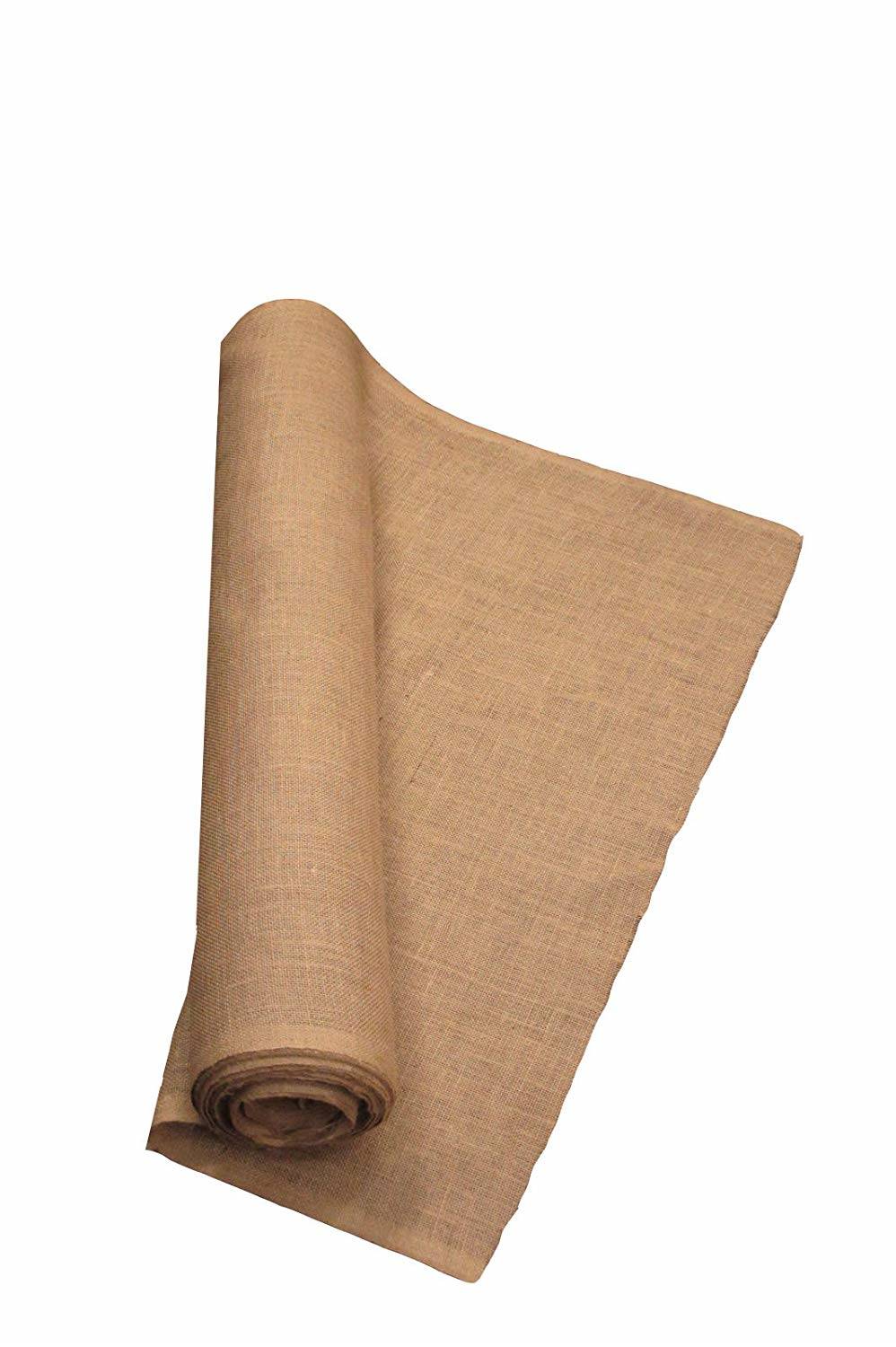
This is the default outdoor burlap runner and the one to start with if you’re getting married on grass or dirt. Made from 100% natural jute with minimal processing. The heavier weave handles wind better than thinner fabric runners, and if it rains briefly it dries fast instead of pooling water. This is the runner we picked for our own backyard ceremony, specifically because it was tough and durable enough to hold up to foot traffic on hard-packed dirt without tearing or scuffing through. You can see it in the photo at the top of this post.
LA Linen sells it in increments from one yard to one hundred yards, which matters because most aisle runners come in fixed lengths that don’t match the aisle you actually have. For a typical backyard or garden ceremony, 50 feet is plenty. For a longer aisle (say, a barn or church), bump to 75 feet so you’re not running short.
Best for: Outdoor weddings on grass or dirt where you want classic rustic at a reasonable price.
Watch for: Burlap sheds short fibers. Wear test against a swatch of your dress fabric before the ceremony to avoid lint on the hem.
Cheaper alternative: Raw jute fabric by the yard from a fabric store runs about $4 to $6 per yard for the same look, though you’ll have to cut it to width yourself.
2. AK Trading 40-Inch Natural Burlap Runner with Ivory Lace
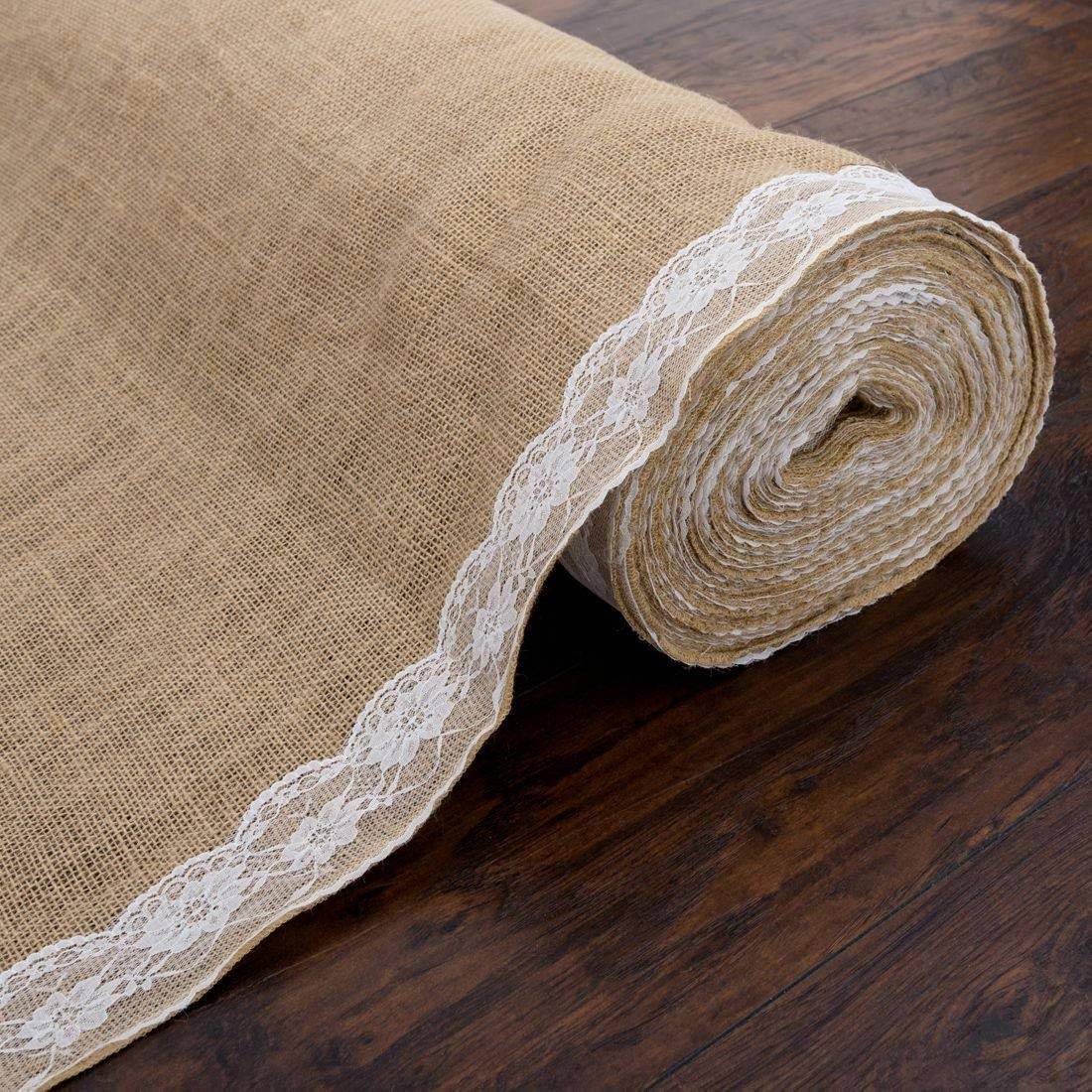
Same all-natural burlap base as the LA Linen above, but with an ivory lace trim that adds about 30% to the price and a noticeable amount of softness to the look. Available in 15, 30, 50, and 100-foot rolls. The 50-foot is the right call for most outdoor ceremonies. If your aesthetic is closer to boho or shabby chic than plain rustic, this is the upgrade worth paying for.
Best for: Boho or shabby chic outdoor weddings where the lace trim earns the upgrade over plain burlap.
Watch for: The lace edges fray if you trim the length, so order the size you actually need rather than cutting it down on-site.
Cheaper alternative: Pair the plain LA Linen burlap above with a separate lace overlay or trim from Etsy for around $20 to $30 total.
3. American Homestead White Scroll Aisle Runner

The premium fabric pick. American Homestead uses 50 gsm material, significantly heavier than the 30 gsm industry standard for fabric runners, which means it lies flatter, holds up to being walked on by twenty people, and photographs without the wrinkle problem that plagues cheap fabric runners. The included pull cord makes setup a one-person job. If you have a formal indoor venue and your photographer is going to spend time on aisle shots, this is the one to pay up for.
Best for: Formal indoor venues where the runner is photographed up close.
Watch for: The pull cord is on one end only, so orient it correctly during setup or you’ll be wrestling 100 feet of fabric backward.
Cheaper alternative: A plain heavy fabric runner without the scroll pattern runs about $40 to $50 from the same category.
4. Healon Aisle Runner with Floral Print
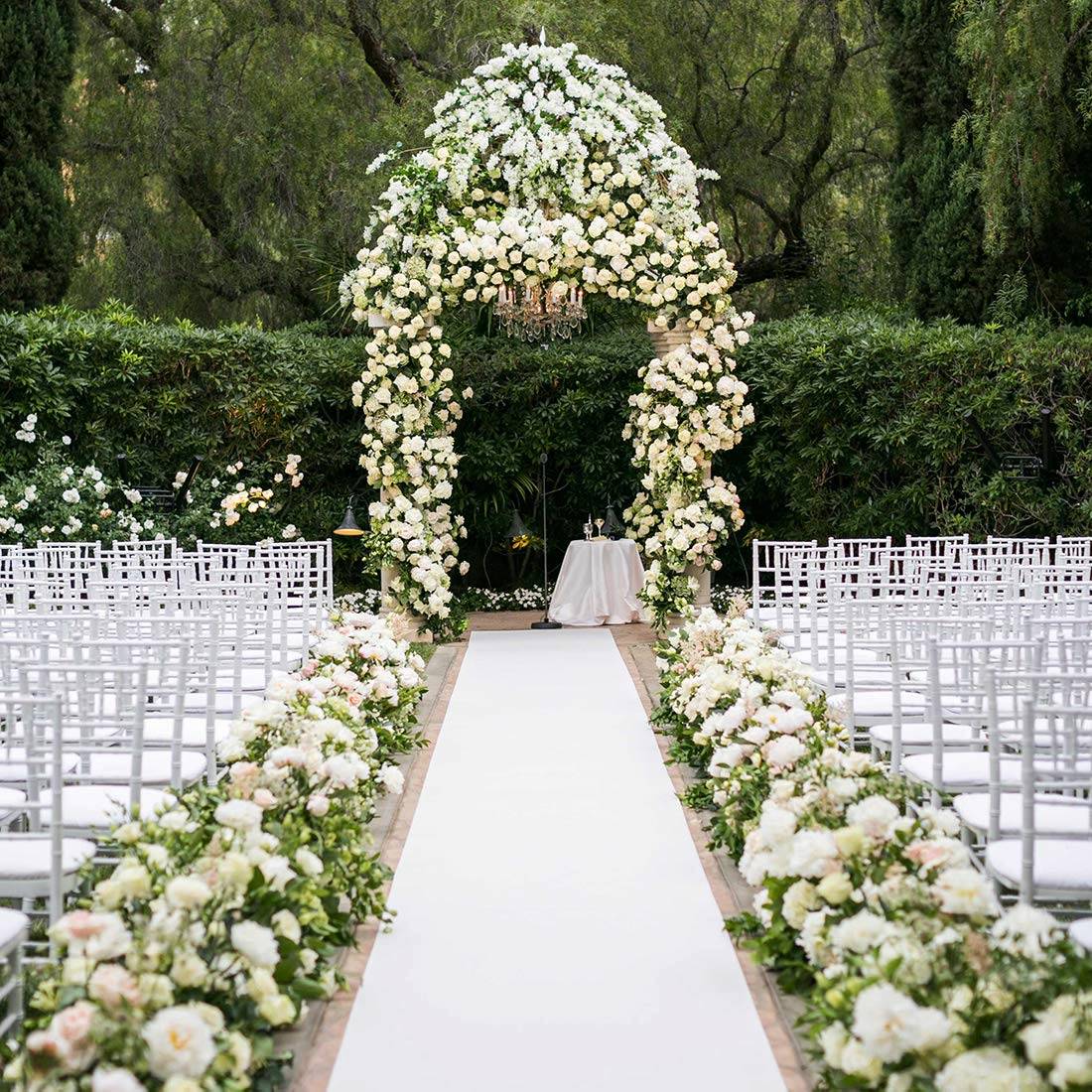
Thinner than the American Homestead, which is the tradeoff for the lower price. The floral print is subtle (visible up close, neutral from the back row), and it works with almost any color palette. The thinness actually helps if you need to trim it. Cutting heavier fabric requires fabric scissors and a steady hand; the Healon you can cut to length with regular kitchen shears. Indoor use only.
Best for: Indoor ceremonies on shorter aisles where the weight of the fabric isn’t critical.
Watch for: Light material wrinkles in storage, so unroll and lay flat 24 hours before the ceremony to release creases.
Cheaper alternative: A plain white polyester runner without the print runs about $15 to $20.
5. Hortense B. Hewitt Floral Fabric Aisle Runner
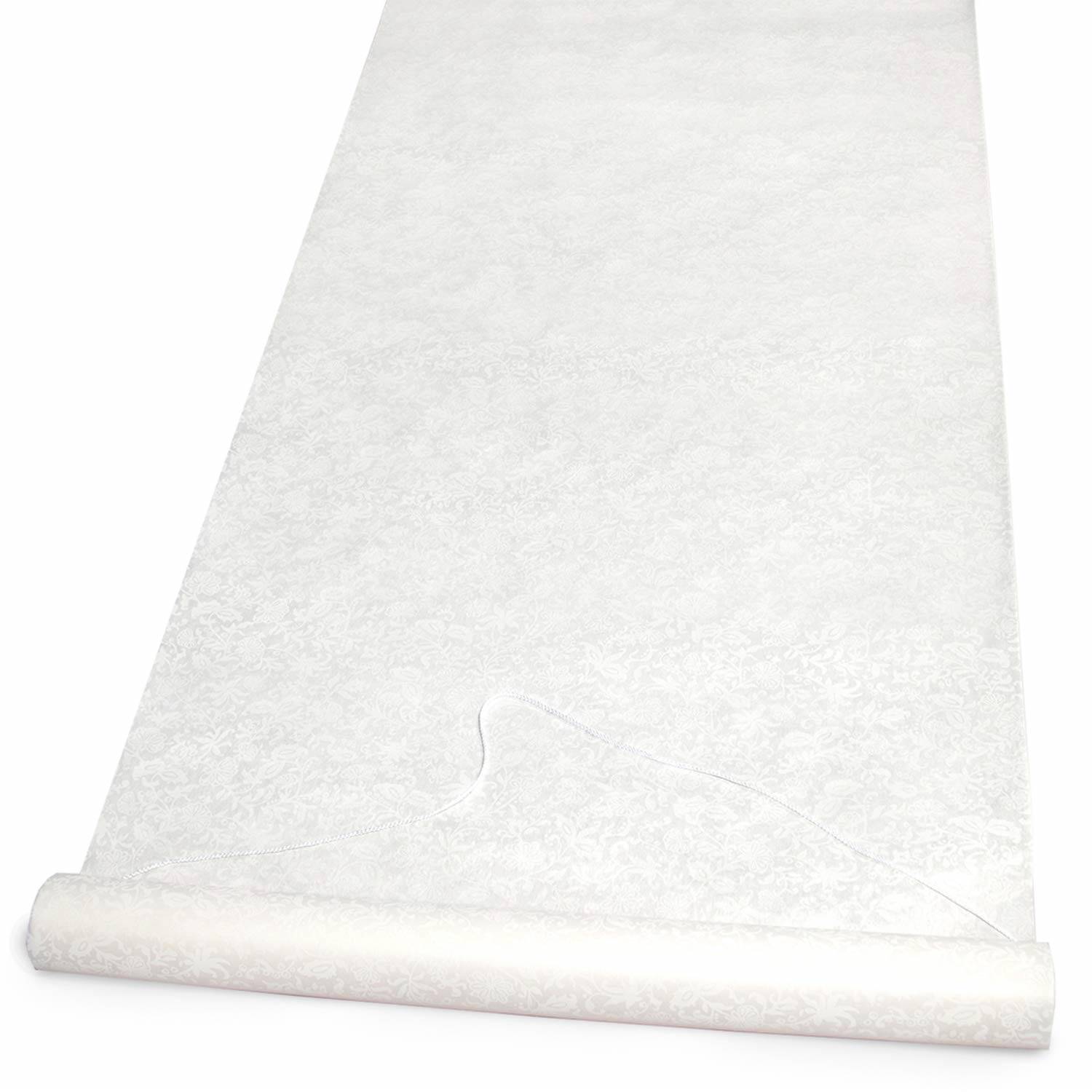
The most flexible fabric pick because it actually comes in ten color options (ivory, white, red, black, and others), which matters if your wedding palette is anything but neutral. Heavy rayon fabric, 36 inches wide, about 100 feet long, with a pull cord for one-person setup. Heavier than the Healon, lighter than the American Homestead.
Best for: Weddings with a non-neutral color palette (red, black, navy) where matching the runner color matters.
Watch for: Rayon shows water stains, so keep it strictly indoors or under full cover.
Cheaper alternative: A solid-color non-woven runner in your accent color from a party supply store.
6. Beistle Elite Collection Polyester Aisle Runner
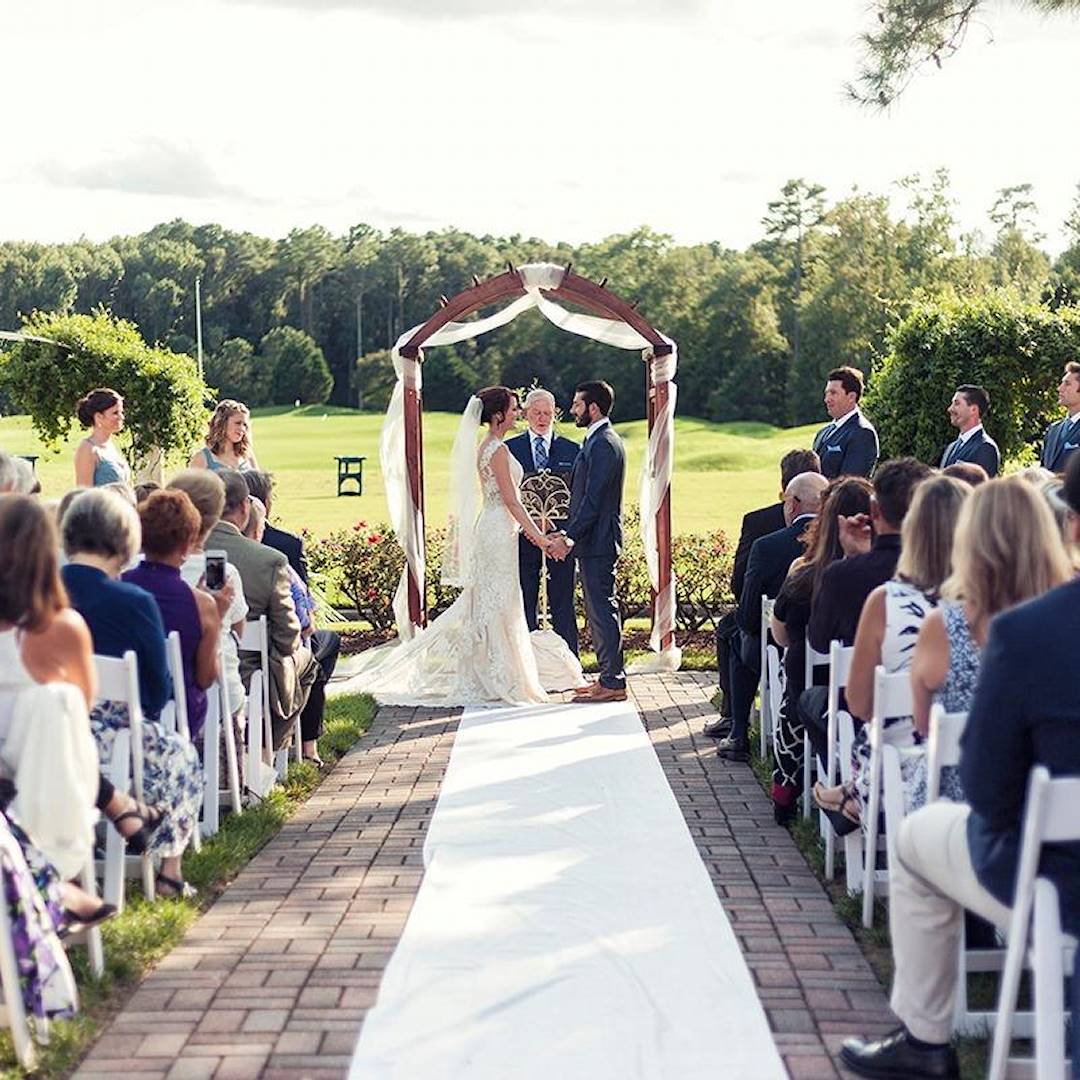
The honest budget pick. Spun polyester, white braided cord for easy unrolling, and it costs less than dinner for two. It’s not going to fool anyone into thinking it’s silk, but it’s also not pretending to be. It looks like a clean white aisle runner from the back row, which is all most guests will see. We’d rather see someone use the Beistle and put the difference toward dinner than use a $100 runner and serve dry chicken.
Best for: Indoor weddings on a tight budget where the runner just needs to look clean from row five.
Watch for: Tears more easily than fabric or burlap under heavy foot traffic, so set up right before the ceremony, not the night before.
Cheaper alternative: Honestly, this is already the cheaper alternative. Below this price point, you’re skipping the runner entirely and using rose petals. See the budget section below.
7. Today I Marry My Best Friend Wedding Aisle Runner
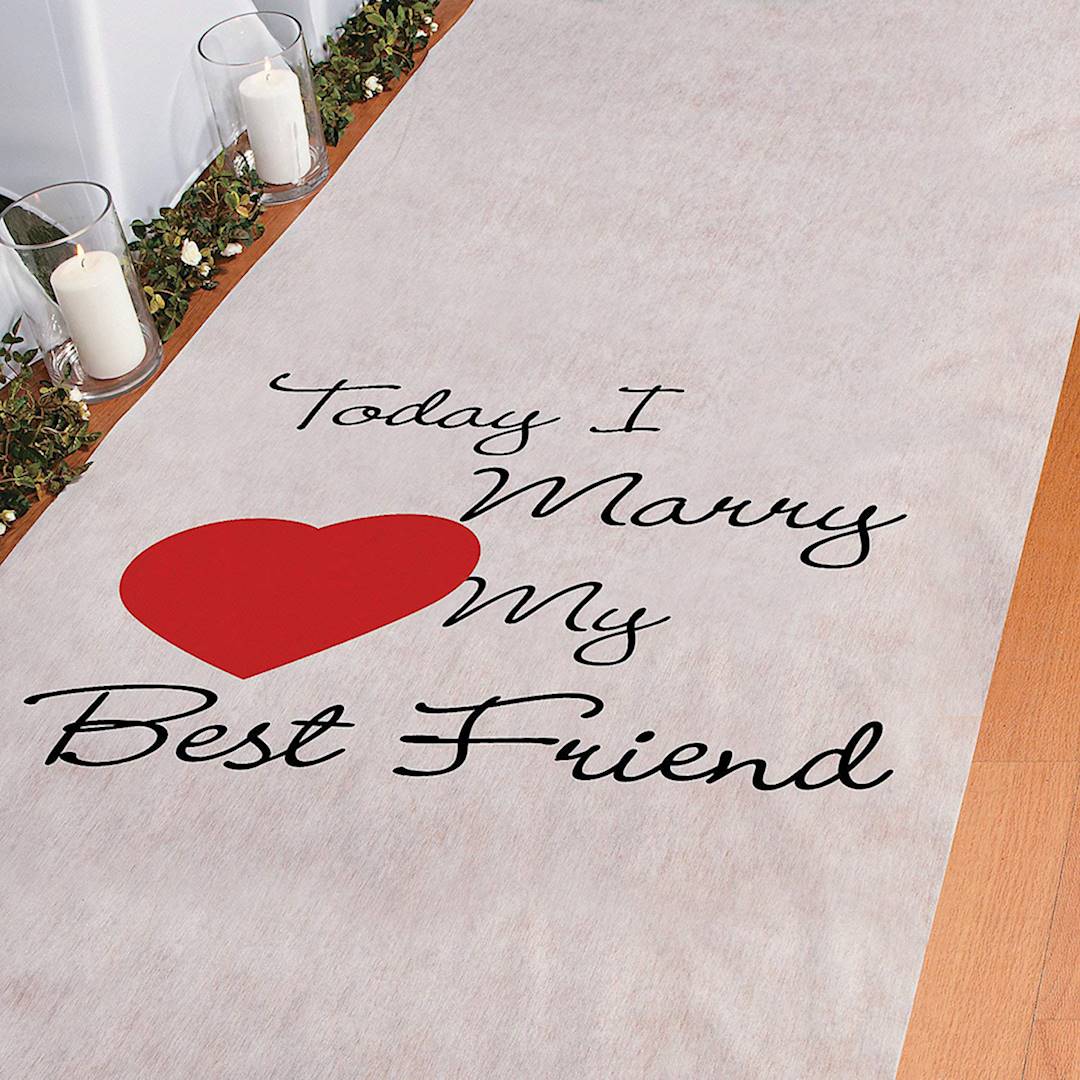
One hundred feet by three feet of non-woven polyester with the phrase printed down the center. It’s the personality pick: either you immediately love it or it’s not for you. The 4.3-star rating on Amazon suggests most of the people who buy it are in the first camp. Works on most surfaces, and adding silk flowers along the edges takes it from “novelty runner” to genuinely sweet without much effort.
Best for: Couples who want a personality piece without paying for full custom monogramming.
Watch for: The phrase is centered down the middle, so keep the runner perfectly aligned during setup or the print will look crooked in photos.
Cheaper alternative: A plain runner plus a custom monogram or text decal from Etsy, around $25 total.
8. Northwest Enterprises Plain White Plastic Aisle Runner
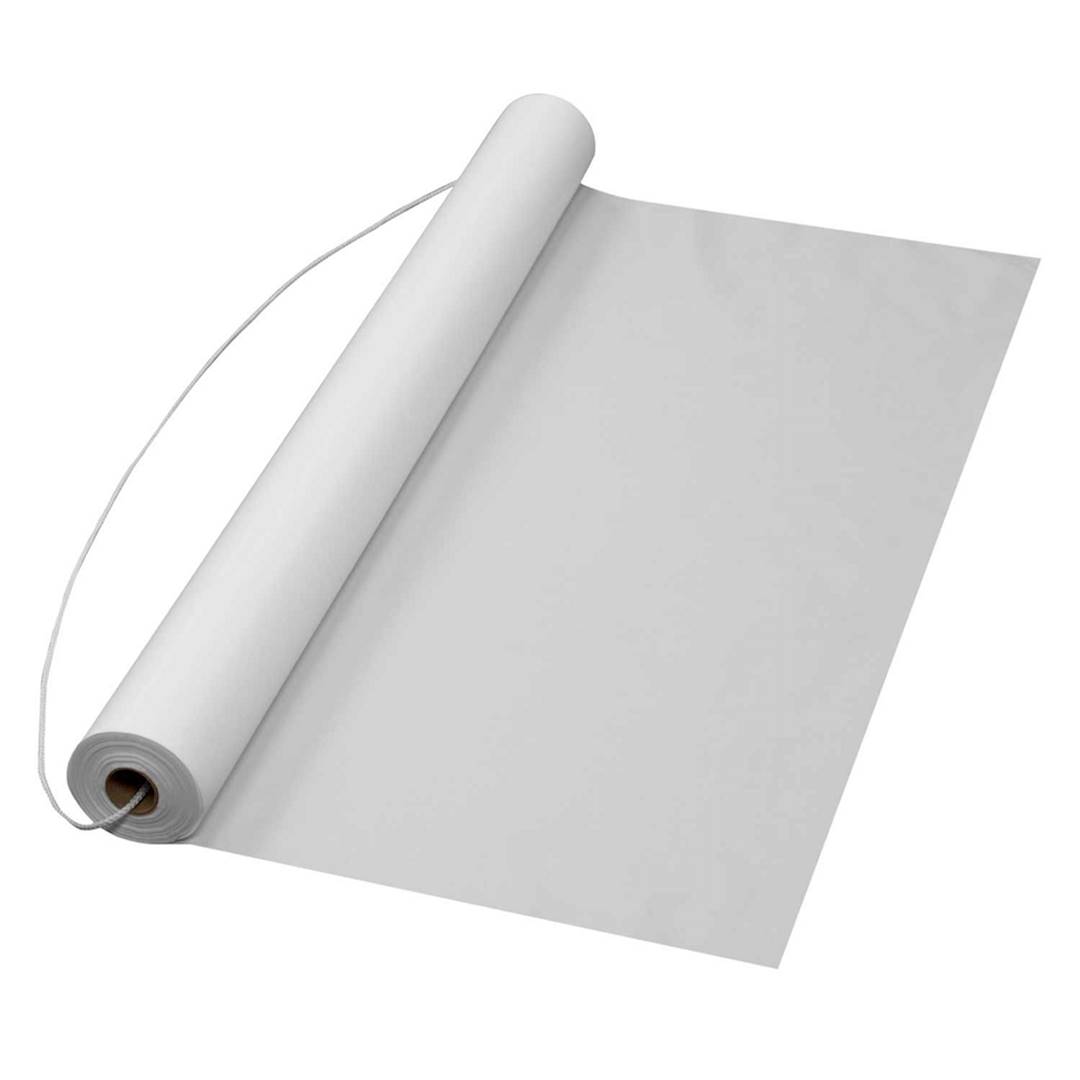
The contingency runner. If your wedding is outdoors and the weather forecast is doing anything other than “sunny all day,” buy one of these and keep it in the truck. Plastic isn’t anyone’s first aesthetic choice, but it wipes dry in thirty seconds, doesn’t soak through, and looks fine in photos as long as it’s pulled tight. 36 inches wide, 100 feet long, with a pull cord.
Best for: Rainy weather contingency or already-wet ground.
Watch for: Slippery underneath when wet, so anchor edges firmly with tape or pegs.
Cheaper alternative: Heavy clear plastic sheeting from a hardware store cut to width, around $10. Doesn’t look as clean but does the same job.
9. FrenzyBird Non-Woven Floral Wedding Aisle Runner
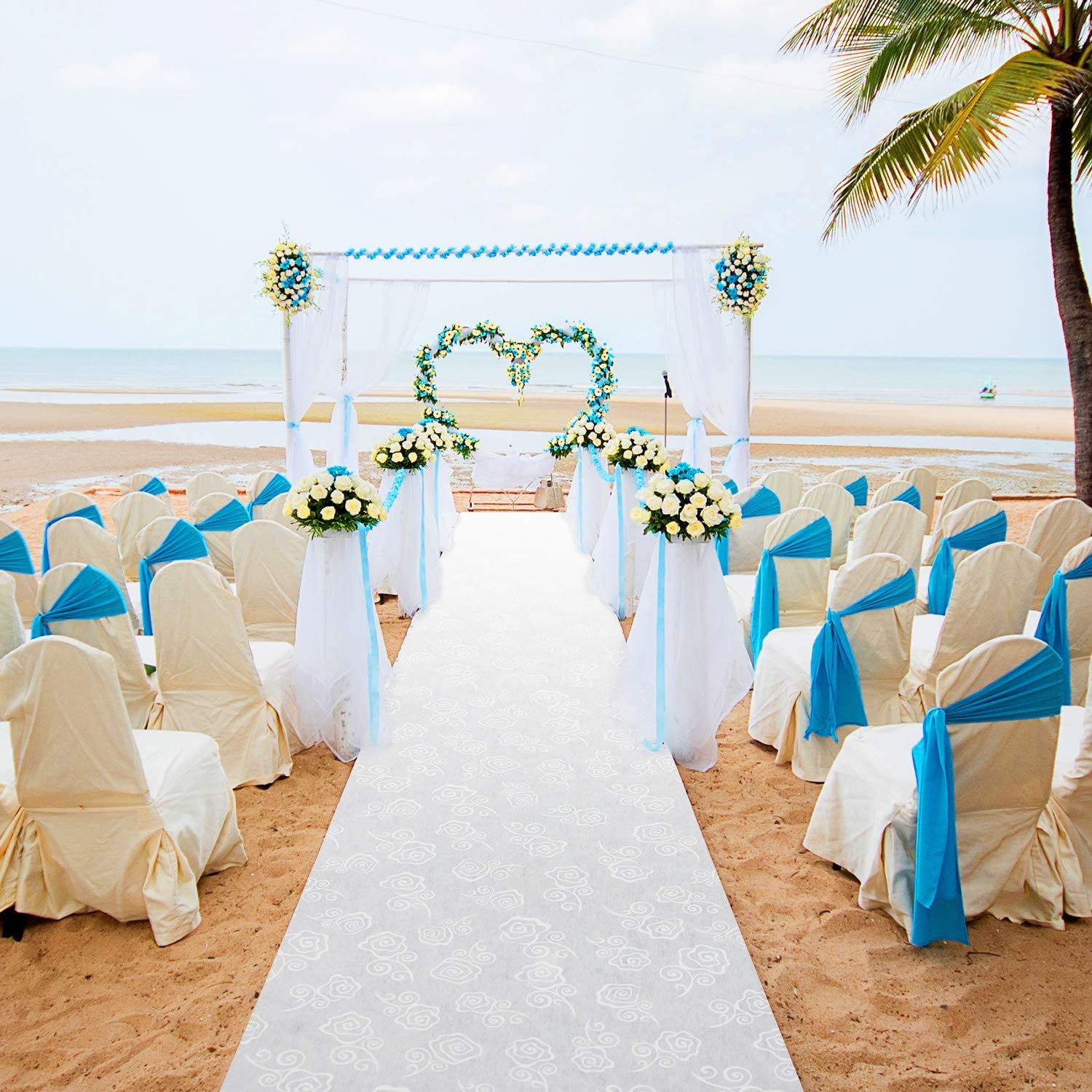
Made from eco-friendly non-woven material, somewhere between fabric and plastic in feel, and the runner that holds up best on the surfaces other materials hate: cement, hard gravel, sand, brick. 100 feet by 3 feet, included setup cord, subtle floral pattern that disappears at distance into a clean white aisle.
Best for: Beach, sand, brick, cement, or any rough surface where burlap and fabric fail.
Watch for: Non-woven material can catch on rough surfaces during unrolling, so lay it loose first, then tape down corners rather than dragging it taut.
Cheaper alternative: A plain white non-woven runner without the floral pattern runs about $15.
Outdoor Wedding Aisle Runners: Grass, Dirt, Beach, and What Actually Works
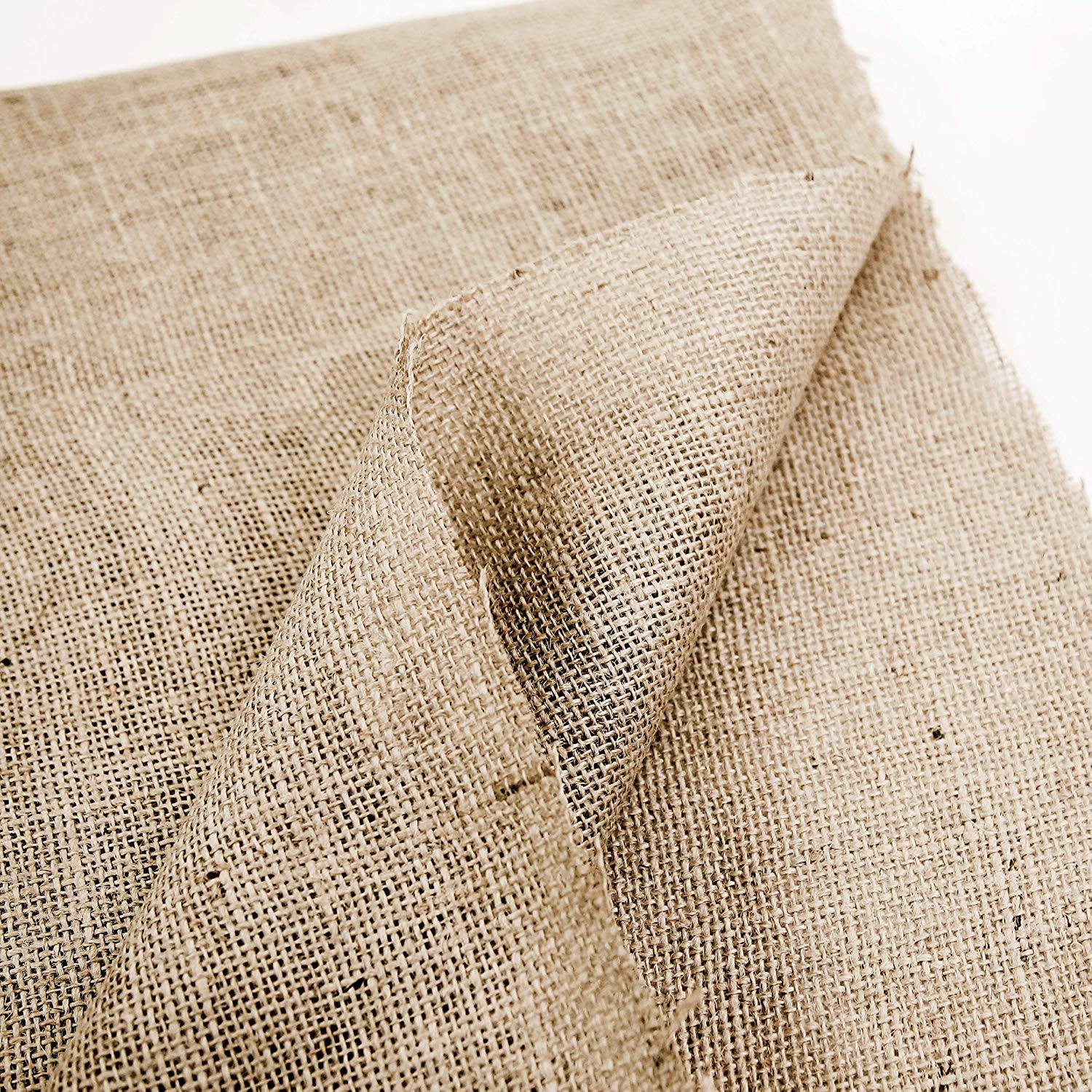
This is the section that matters most if you’re getting married outside, because the product list above only solves half the problem. Outdoor aisles fail not because of the runner itself but because of the ground underneath and the wind on top.
On grass, the move is burlap or non-woven (LA Linen, AK Trading, FrenzyBird). Skip fabric. Light fabric runners catch wind and bunch into a tripping hazard within ten minutes. You’ll need tent pegs at the corners and at intervals of about every ten feet along the edges. Hammer them in flush so heels don’t catch them, and remind anyone wearing heels in the processional to step slightly higher than usual, since even a well-secured outdoor runner will have small ripples.
On hard-packed dirt (which is what our own backyard ceremony sat on), burlap is the right answer. The texture works visually against the dirt. Fabric runners look weirdly clean against rough ground, like someone forgot a tablecloth, and burlap doesn’t show light scuffing the way a white plastic runner would. Tent pegs work on packed dirt about as well as they do on grass; you may need to hit them a bit harder to get them in. If the dirt is dusty, plan on a quick sweep of the runner before the processional starts.
On beach or sand, FrenzyBird’s non-woven material outperforms everything else because sand grinds into burlap weave and stays there. You won’t be able to use tent pegs effectively in soft sand, so weight the corners with something heavy (river rocks wrapped in matching fabric look intentional) and accept that the runner will move a little. This is also a strong case for skipping a runner entirely. Bare sand is what people come to a beach wedding for.
On brick, cement, or paving stones, double-sided carpet tape works better than tent pegs (which you obviously can’t use). Test the tape on an inconspicuous spot first; some venue surfaces will hold residue.
If rain is in the forecast, buy the Northwest plastic runner as a backup even if you’ve already bought something nicer. The plastic runner is $20 of insurance. We’d rather you have it and not use it than be ten minutes from the ceremony with a soaked burlap runner that’s now mud-colored.
Aisle Runner Ideas on a Budget
If the math on aisle runners (fifty feet of fabric you’ll use once) doesn’t sit right with you, the alternatives below are legitimate, not afterthoughts. We’d rather see someone use rose petals or eucalyptus than buy a runner they don’t actually want.
Line the aisle with rose petals

A 1,000-piece bag of silk or freeze-dried rose petals on Amazon runs about $10 to $15 and covers a ceremony aisle with petals to spare. The advantage over a runner: nothing to roll up, nothing to peg down, no wind problem. The catch: petals don’t protect the bottom of a dress, so on a wet or muddy aisle they’re a complement to a real runner, not a replacement. This also doubles up nicely on top of a plain burlap or fabric runner. You get the texture of the runner plus the visual of the petals for an extra ten dollars. That’s what we did at our own ceremony (visible in the photo at the top of this post), and it’s the move we’d recommend to anyone who wants the burlap base with a softer look on top.
Spread fresh-cut eucalyptus or greenery
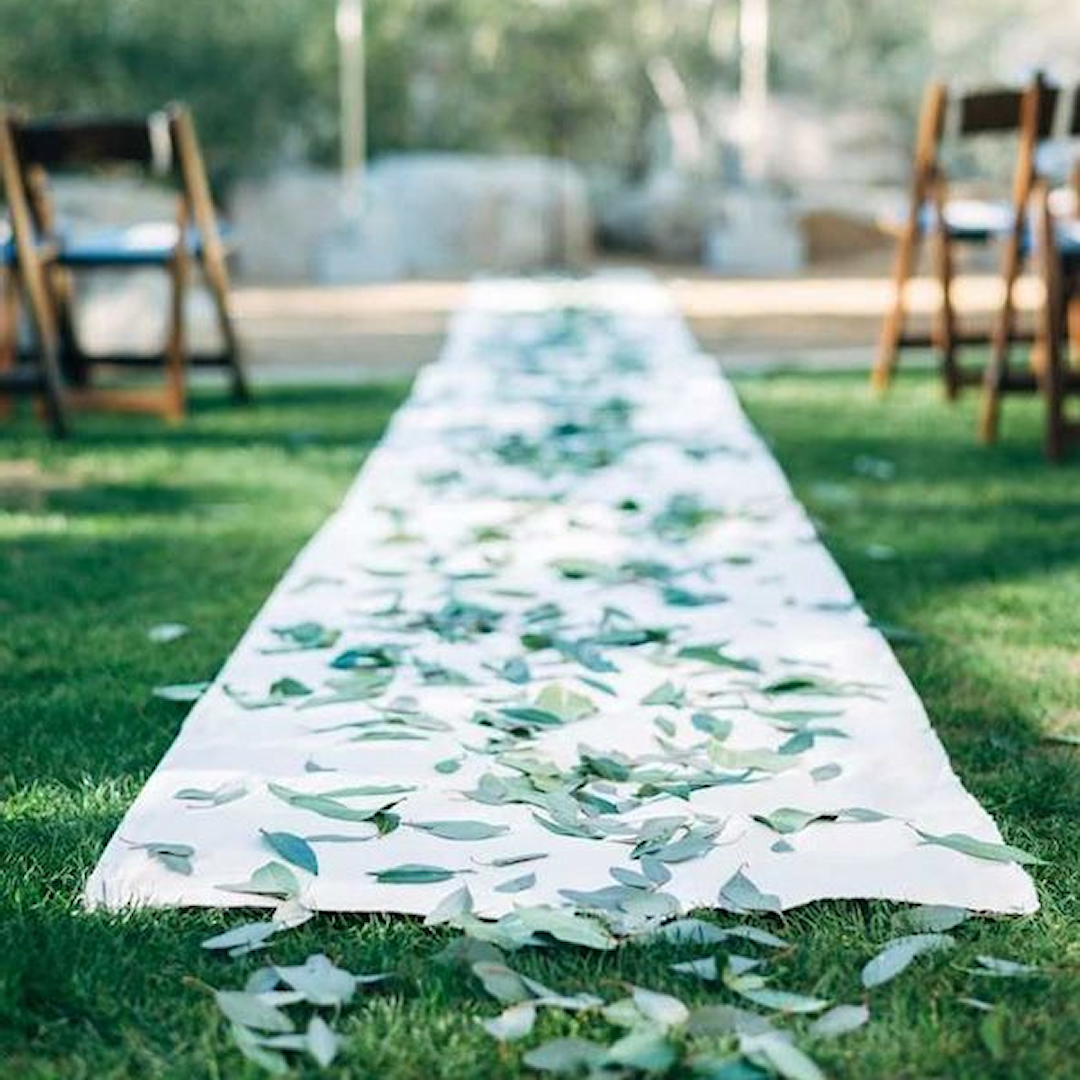
Fresh-cut eucalyptus in bulk runs $30 to $60 from online wholesalers (about the cost of a basic runner) and produces the dense green-edge aisle look that’s been all over wedding photography for the last few years. Set up day-of (eucalyptus wilts fast in heat) and clear away in two minutes after the ceremony. This works especially well for outdoor or rustic ceremonies and pairs naturally with a burlap runner if you want both. Check our best church wedding decorations guide for indoor pairings.
Lay out distressed Moroccan or vintage rugs

Three or four distressed vintage rugs laid end-to-end down the aisle, slightly overlapping, in a mix-and-match palette. This costs more than a runner ($150 to $400 depending on rug sourcing) but the rugs aren’t disposable. You keep them after the wedding. If you were going to spend on rugs anyway, the wedding-day double-duty makes the runner effectively free. This is the move for couples planning to move into a new place after the wedding, and the venues that suit it are the same ones that suit the burlap runners above: barn, garden, backyard, vineyard.
How to Choose a Wedding Aisle Runner
Three questions, in this order. Get them right and the runner picks itself.
1. Where is your ceremony? Outdoor on grass or dirt means burlap or non-woven. Indoor or under cover means fabric, polyester, or non-woven. Beach or sand means non-woven only. Hard surfaces like brick, cement, or tile call for non-woven or plastic with double-sided tape. The material is doing 80% of the work, so get this right first.
2. How long is the aisle? Measure it. Then add ten feet. A 30-foot backyard aisle still wants a 40-foot runner so it extends past the last row. A standard church aisle is usually 50 to 75 feet. Beach and barn aisles are usually 60 or more. Most runners come in 50-, 75-, and 100-foot options. Round up rather than down.
3. How much should you spend? Three honest tiers:
- Under $30: Beistle Elite Polyester or Northwest Plastic. Looks fine in photos. Spend the savings on something guests actually engage with.
- $30 to $80: LA Linen Burlap, AK Trading Burlap with Lace, Hortense Floral, or FrenzyBird. This is where most weddings land and where the cost-to-quality ratio is best.
- $80 and up: American Homestead Scroll, or the vintage Moroccan rug option. Worth it if your photographer is shooting aisle-centric coverage or if the runner is doing double duty as decor after the wedding.
Frequently Asked Questions
Can I use a wedding aisle runner for an outdoor wedding?
Yes. Outdoor is actually where aisle runners do the most work, both visually and practically (keeping dresses and shoes off grass, dirt, and uneven ground). The catch is material: burlap and non-woven runners are made for outdoor use; light fabric runners are not. If you’re outdoors, choose burlap, jute, plastic, or non-woven, and skip fabric unless you’re under a fully covered tent.
How do I secure an aisle runner on grass?
Tent pegs. Hammer one in at each corner and one every ten feet along the edges, flush with the ground so heels don’t catch them. The corners are the most important. If a corner lifts in wind, the whole runner will bunch toward the middle. For grass that’s too hard to drive pegs into, use landscaping staples or weight the corners with rocks or sandbags wrapped in matching fabric.
How long should a wedding aisle runner be?
Measure your aisle and add about ten feet. The runner should extend slightly past the last row of chairs and slightly past where the couple will stand. 50 feet covers most backyard and garden ceremonies; 75 feet is the right size for most church and barn aisles; 100 feet for unusually long aisles or formal venues. When in doubt, buy longer. You can always trim, you can’t extend.
How wide should a wedding aisle runner be?
Three feet (36 inches) is the standard width and what almost all commercial runners are sold at. This gives enough room for the couple to walk back up the aisle side by side. If you have an unusually large dress or want a more dramatic look, you can find 40-inch and even 48-inch options, but most weddings don’t need wider than three feet.
How much does a wedding aisle runner cost?
Anywhere from about $15 to $120 for off-the-shelf options. The under-$30 tier is plastic or basic polyester; $30 to $80 is where you’ll find burlap and most fabric runners; $80 and up is for heavier premium fabric or custom-printed runners. Custom monogrammed runners run $150 to $400. For most weddings, the $30 to $80 range is the right spend.
Can you reuse a wedding aisle runner?
Sometimes. Burlap and heavy fabric runners can be cleaned and reused for a second event if they haven’t been damaged. Polyester and non-woven runners are technically reusable but rarely survive the rolling and storage well enough to look right a second time. Plastic runners are single-use. If reusability matters, look at the heavier fabric and burlap options.
What’s the best material for an outdoor aisle runner?
Burlap is the most common and most reliable outdoor choice. It’s heavy enough to resist wind, dries fast if it rains briefly, and matches the rustic-to-formal range that most outdoor ceremonies fall into. Non-woven polyester is the second pick, especially for beach or hard-surface ceremonies. Avoid light fabric outdoors unless you’re under full cover.
Do I actually need an aisle runner?
No. Aisle runners are optional, and a lot of weddings skip them entirely, especially indoor ceremonies on clean floors and beach ceremonies where bare sand is part of the aesthetic. The case for a runner is strongest for outdoor ceremonies on grass, dirt, or uneven ground (where it protects dresses and shoes) and for formal indoor ceremonies (where it adds visual structure to the aisle). Anywhere else, it’s a choice, not a requirement.
Final Thoughts
An aisle runner is a small decision that gets oversold by the wedding industry as a big one. Pick the material that matches your venue, get the length right, and don’t spend more than the math justifies for something you’ll walk over once. Most weddings land at burlap for outdoor or polyester for indoor, both in the $25 to $60 range, and that’s usually exactly right.
This site started in 2017 when we put together our own backyard wedding without a coordinator and learned half this stuff the hard way. More on how Weddings To The Wire came together on our about page.

Dustin is the founder of Weddings to the Wire, which he started in 2017 while planning his own $15,000 backyard wedding. He writes about budget-conscious wedding planning, vendor recommendations, and the questions couples actually ask.